AI Roadmap for Beginners: A 3-Month Step-by-Step Plan With Zero Experience
AI is no longer a futuristic concept; it is a reality transforming industries and careers. From healthcare and finance to marketing and education, organizations are actively hiring professionals with AI skills. The good news? You don’t need a technical background or prior experience to get started.
This guide provides a clear AI roadmap for beginners, designed specifically for those with zero experience. If you are wondering how to break into AI with no experience or what to study first, this structured 3-month plan will give you clarity, confidence, and direction.
Why a Structured 3-Month AI Study Plan Works
Most of the time, people quit AI learning in the middle because they lack the right direction. They feel overwhelmed by random tutorials, scattered courses, and unspecified goals, all of which lead to burnout.
A 3-month AI study plan works because:
- Breaks complex AI topics into manageable phases
- Encourages step-by-step learning
- Balances theory, practice, and projects
- Prepares you for entry-level AI roles, not just certificates
With consistency, even just for 1-2 hours a day, you can make your transition into AI successful. All you have to do is follow it and implement it relentlessly.
What You Need Before Starting (Even With Zero Experience)
These are the 3 primary things you need to have before you start.
Right Mindset
You don’t need advanced math from day one. Curiosity, patience, and consistency matter far more than prior knowledge.
Time Commitment
- Minimum: 8–10 hours per week
- Ideal: 1–2 hours daily
No Coding? Still Possible
We all know coding can feel a bit intimidating, especially for non-tech people. But there is a catch; instead, start with:
- Google AutoML
- Teachable Machine
- ChatGPT and no-code AI tools
Foundational Resource
A solid foundation is essential for building a robust career. To bolster your career, prepare your foundation with:
- Python basics (free platforms)
- Beginner ML videos
- Open-source datasets
- GitHub for portfolio building
This entry-level AI guide assumes no prior technical knowledge.
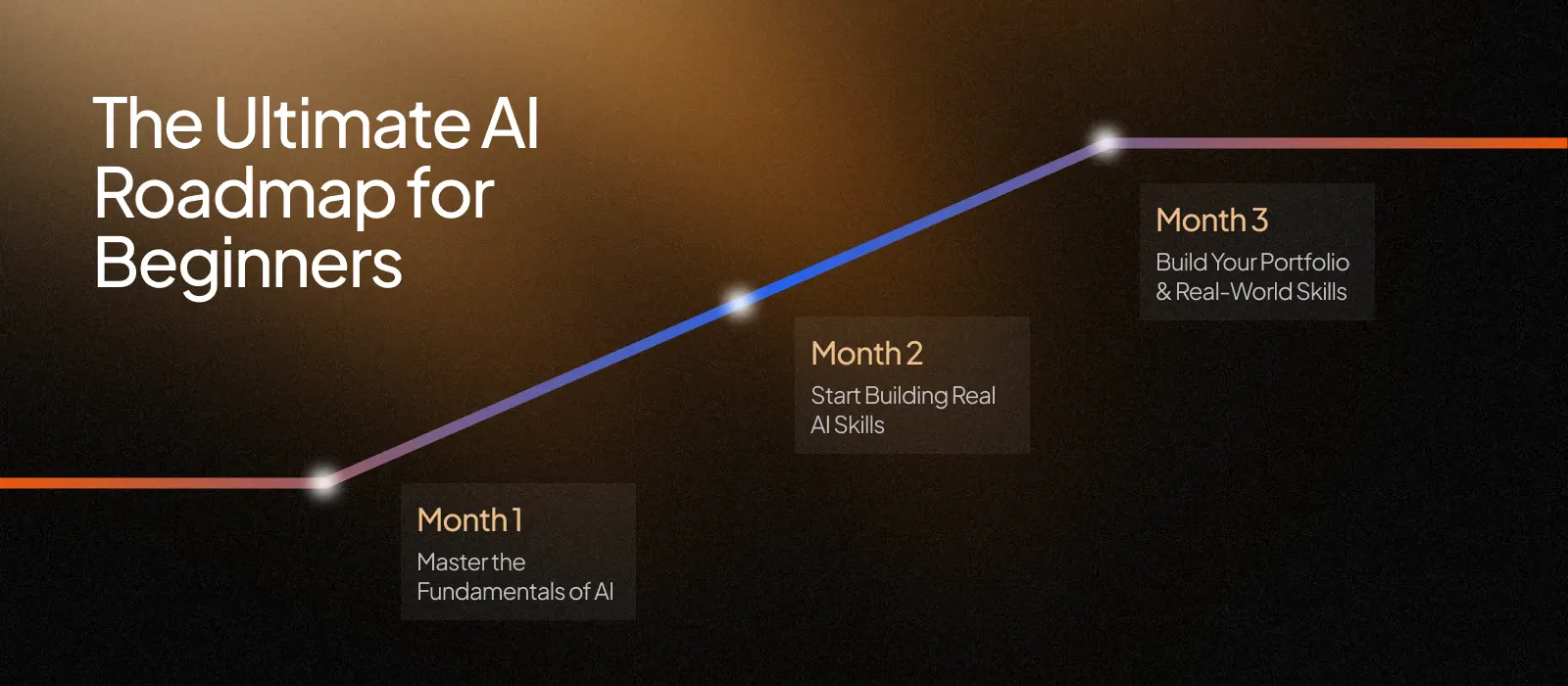
Month 1: Master the Fundamentals of AI
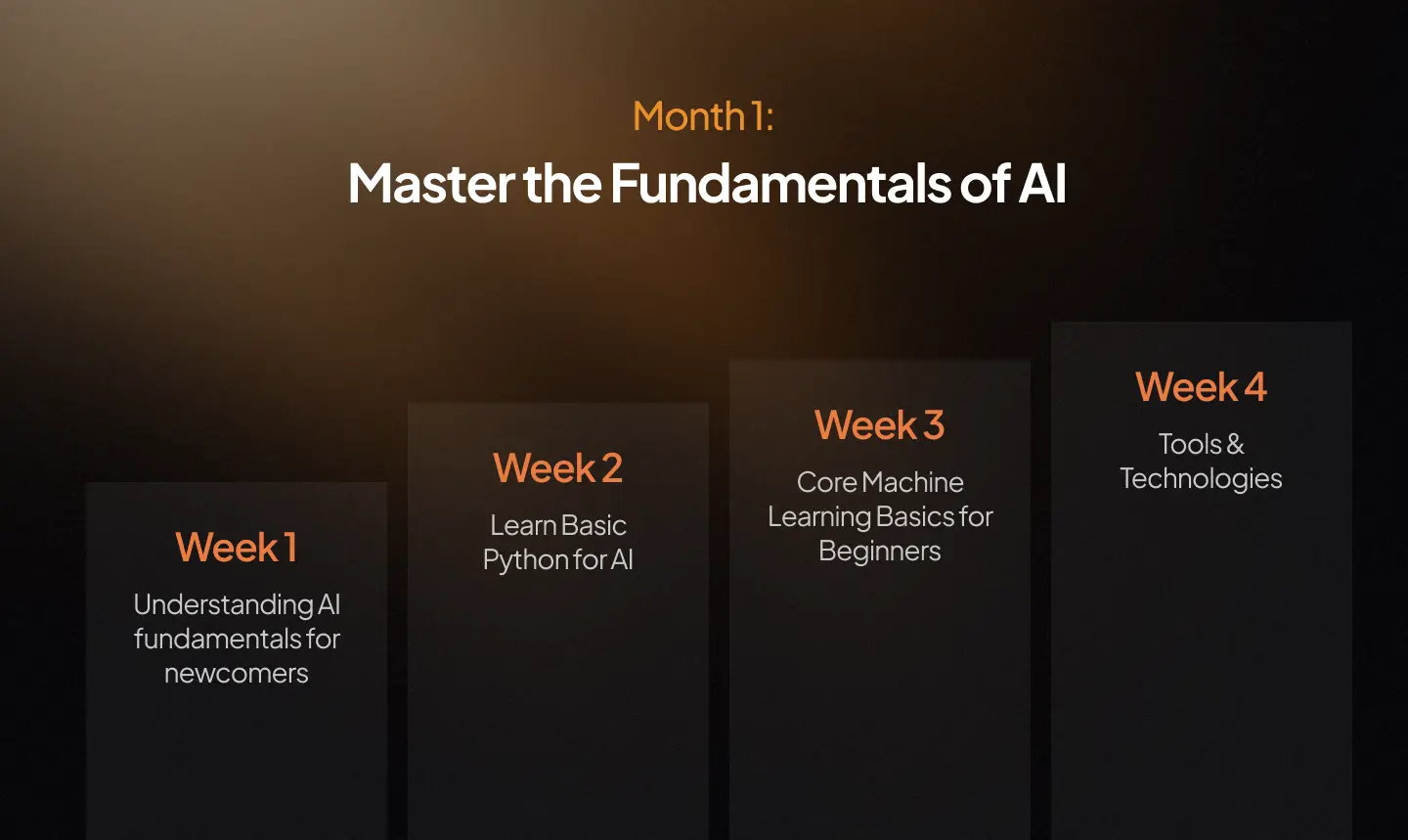
Week 1: Understanding AI Fundamentals for newcomers
The first thing is to focus on AI fundamentals for newcomers:
- What is Artificial Intelligence?
- AI vs Machine Learning vs Deep Learning
- Real-world AI use cases
- Understanding data and models
Your goal should be: Build Clarity, understand basics, and know where you can go.
Week 2: Learn Basic Python for AI
There is no doubt that Python is the backbone of AI.
- Variables, loops, and functions
- Lists and dictionaries
- NumPy and Pandas basics
Remember, don’t aim for mastery at the initial stage. Look for different ways to finish the tasks.
Week 3: Core Machine Learning Basics
This week is dedicated to machine learning basics for beginners:
- Supervised vs unsupervised learning
- Regression and classification
- Training vs testing data
- Overfitting and underfitting
Week 4: Tools & Technologies
Get familiar with the necessary tools, but don’t ignore other tools.
- Jupyter Notebook
- Scikit-learn
- Google Colab
- GitHub basics
End of Month 1 Goal: You should understand how AI works, even if you can’t build advanced models yet. Also, try out all other tools that can help you. Don’t be selective at the initial stage. Explore all and then choose one.
Month 2: Start Building Real AI Skills
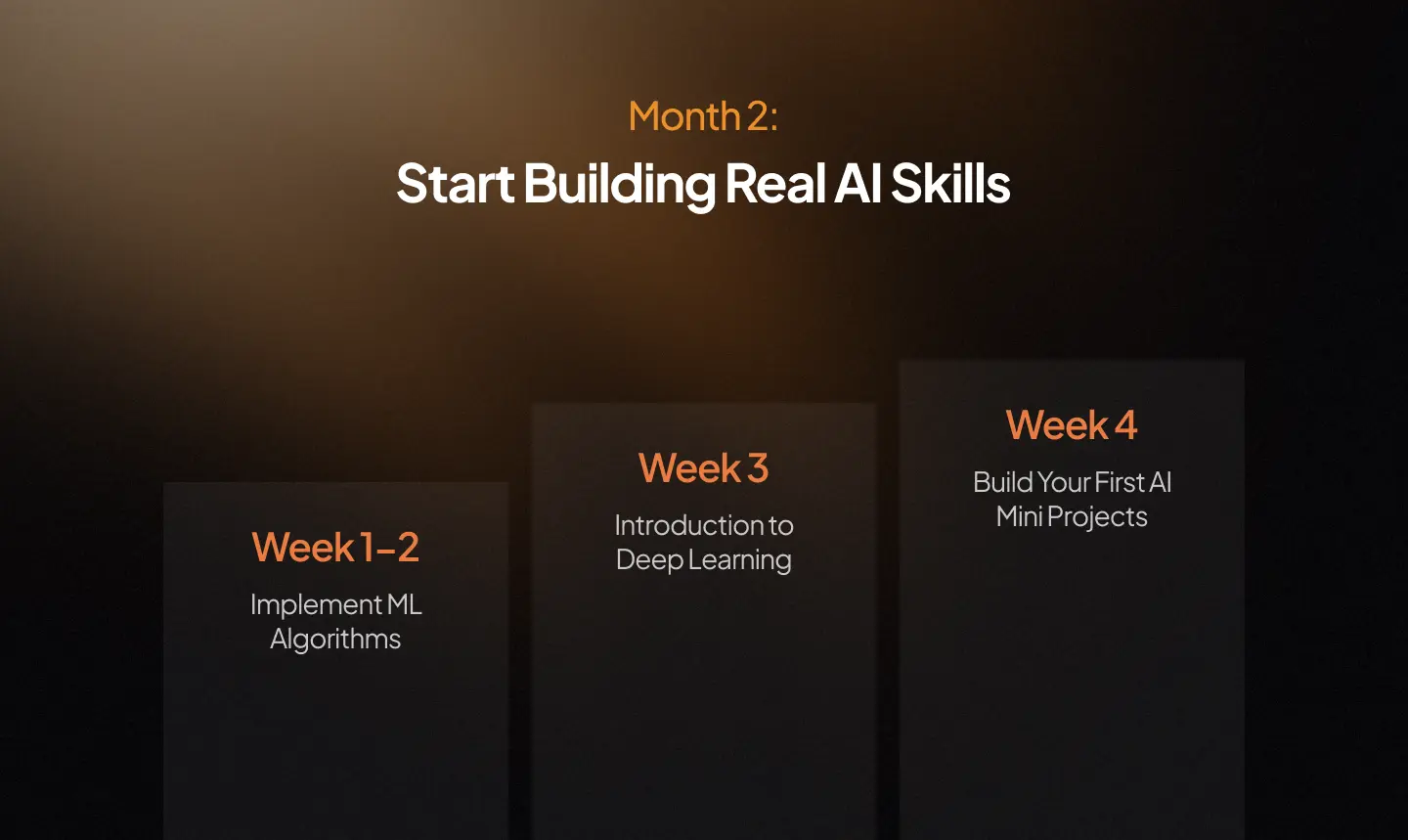
Weeks 1–2: Implement ML Algorithms
Now comes the second part, hands-on learning:
- Linear and Logistic Regression
- Decision Trees
- K-Nearest Neighbours
Work with small datasets and focus on:
- Data cleaning
- Model training
- Accuracy evaluation
This phase turns theory into real AI skills for beginners. Implement these into your own project and work towards it.
Week 3: Introduction to Deep Learning
Learn the basics of deep learning at the beginning level. Learn:
- What are neural networks?
- How deep learning differs from ML
- Use cases of CNNs & RNNs
- Tools like TensorFlow or PyTorch (basics)
Week 4: Build AI Mini Projects
To assess your skill set, start with a simple AI mini-project. Examples:
- Spam email classifier
- House price prediction
- Movie recommendation system
- Simple chatbot
Month 3: Build Your Portfolio & Real-World Skills
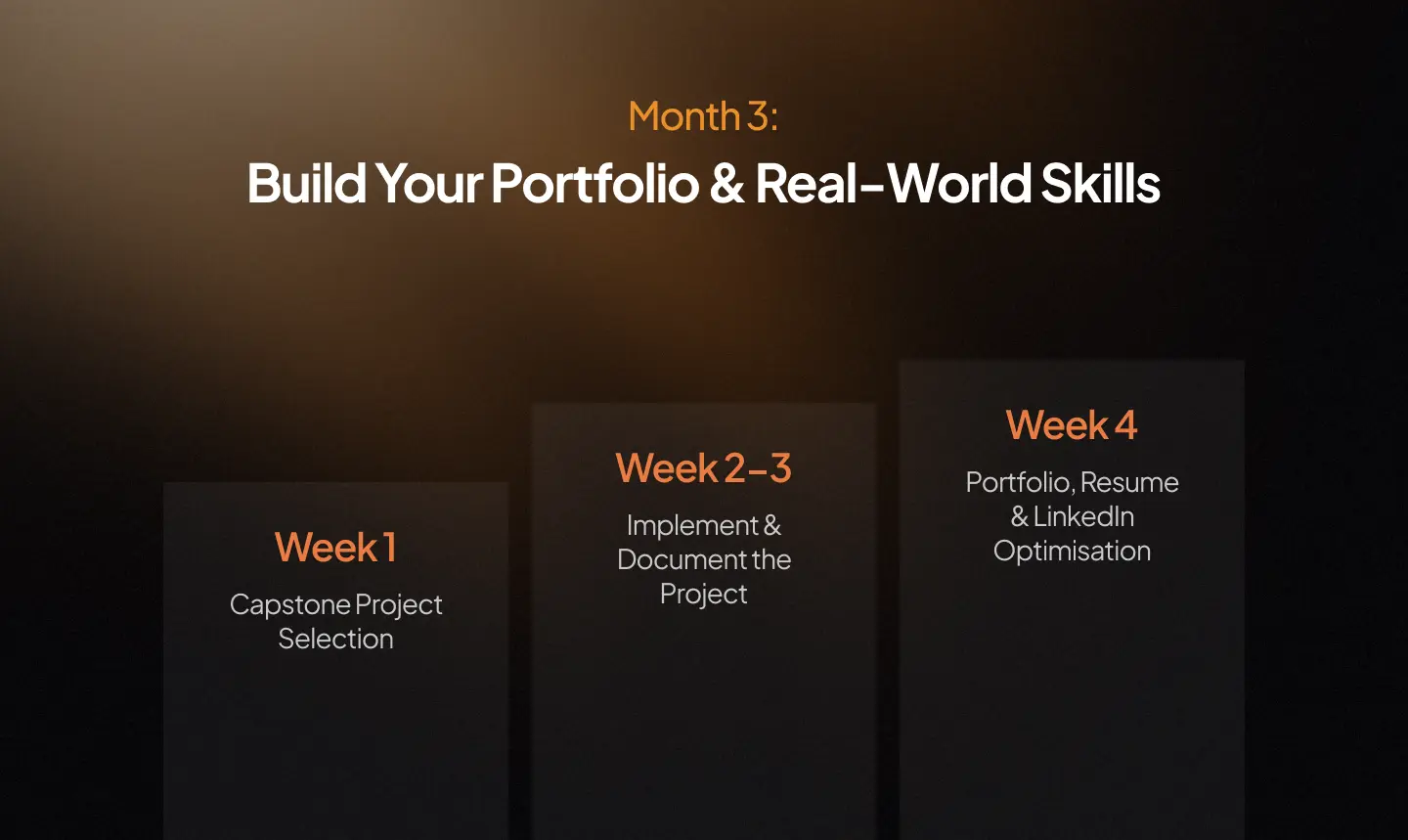
Week 1: Capstone Project Selection
Choose one strong project, such as
- Resume screening AI
- Sales prediction model
- Sentiment analysis tool
- Image classification project
Pick something that solves a real problem. If the problem is already solved, try to replicate it and improve it. Not only will this make you understand how they work, but it will also give you a way to improve the current model. A crucial learning in the age of AI.
Weeks 2–3: Implement & Document
- Clean code
- Clear explanations
- Dataset understanding
- Model performance evaluation
Week 4: Portfolio & LinkedIn Optimization
Now it is time to look for an opportunity to showcase and implement what you have learned. Do the following:
- Upload projects to GitHub
- Create a portfolio website
- Update the LinkedIn headline with “Aspiring AI Professional.”
- Highlight tools and projects
This step enables your transition into AI, even without job experience. Projects will give you a competitive edge over candidates who have theoretical learning.
How to Get AI Opportunities With Zero Experience
1. Internships & Freelance Gigs
You are fresher, and the first question you get is, “Who is going to hire me?” But the world has a lot to offer. Look for:
- AI internships
- Data analysis roles
- Entry-level AI jobs
- Freelance ML tasks
Internships will expose you to real-world projects and an understanding of different skill sets.
2. Open-Source Contributions
Don’t keep the project for a resume. Show it to the world. You can do that by contributing to:
- GitHub AI repositories
- Dataset cleaning
- Documentation
Recruiters value this highly. They get to know what you are capable of. This reduces the friction to hire you.
3. Showcasing Projects Effectively
As the saying goes, first impressions matter. Showcase your projects.
- Write clear README files
- Share projects on LinkedIn
- Explain your learning journey
4. Talking About AI in Interviews
The crucial part of an interview. Focus on:
- Problem-solving approach
- Project decisions
- Learning mindset
- Business impact, not jargon
- Keep in touch with AI trends
This is how beginners successfully break into AI with no experience. This might be too much within a short period of time, but it has done wonders for our students.
Tools & Resources to Accelerate Your AI Journey
There are plenty of platforms you can start your AI journey on. Terralogic Academy is one such platform where you can begin your career.
Learning Platforms
- Coursera
- freeCodeCamp
- Kaggle
- YouTube AI beginner channels
Beginner-Friendly AI Tools
- Google Colab
- Scikit-learn
- TensorFlow
- ChatGPT
Communities to Join
- Kaggle forums
- GitHub
- LinkedIn AI groups
- Reddit AI communities
The 30% Rule for AI Learning
Spend 30% of your time learning theory and 70% applying it. AI rewards practice, not perfection.
All topics



 HELP CENTER